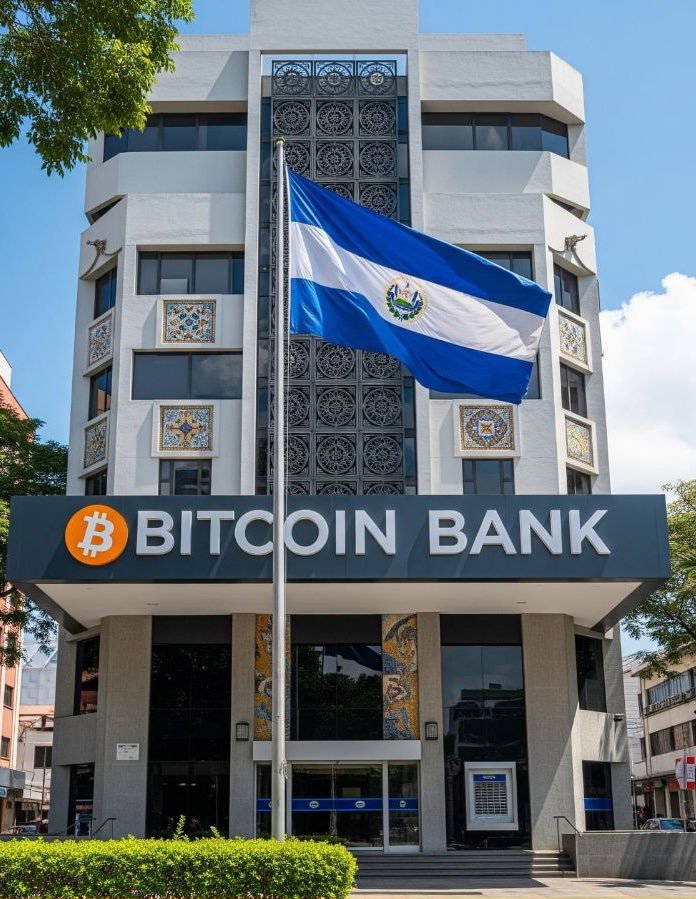
In a groundbreaking development that has sent ripples through the global financial landscape, El Salvador has announced the launch of the world’s first Bitcoin Bank.
This move builds on El Salvador’s pioneering decision in 2021 to adopt Bitcoin as legal tender, a step that positioned it as a trailblazer in the global adoption of digital currencies. As the world watches, the implications of this new institution—both economic and philosophical—are poised to reshape the narrative around Bitcoin and its role in sovereign economies.
A Continuation of a Revolutionary Vision
El Salvador’s journey with Bitcoin began on September 7, 2021, when the Bitcoin Law came into effect, making it the first country to recognize the cryptocurrency as legal tender alongside the U.S. dollar. The decision, spearheaded by President Nayib Bukele, was met with both enthusiasm and skepticism.
Proponents hailed it as a path to financial inclusion and a hedge against inflation, while critics pointed to the environmental impact of Bitcoin mining and the lack of public understanding— a 2021 poll by the Central American University found that 68% of Salvadorans opposed the move, with 90% lacking clarity on what Bitcoin entailed.
Despite initial hurdles, including protests and a rejected request for World Bank assistance due to transparency concerns, El Salvador has doubled down on its crypto ambitions.
The launch of the Bitcoin Bank, represents a significant escalation. The institution, suggests a state-backed effort to integrate cryptocurrency into everyday financial services, potentially offering custody, lending, and transaction support.
Challenging Bitcoin’s Decentralized Roots
The establishment of a Bitcoin Bank raises intriguing questions about the cryptocurrency’s original intent. Created by the pseudonymous Satoshi Nakamoto in 2008, Bitcoin was designed as a decentralized alternative to traditional banking, as outlined in its seminal whitepaper. The idea was to empower individuals by circumventing centralized financial institutions. Yet, El Salvador’s move to institutionalize Bitcoin under a state-run bank appears to pivot toward centralization.