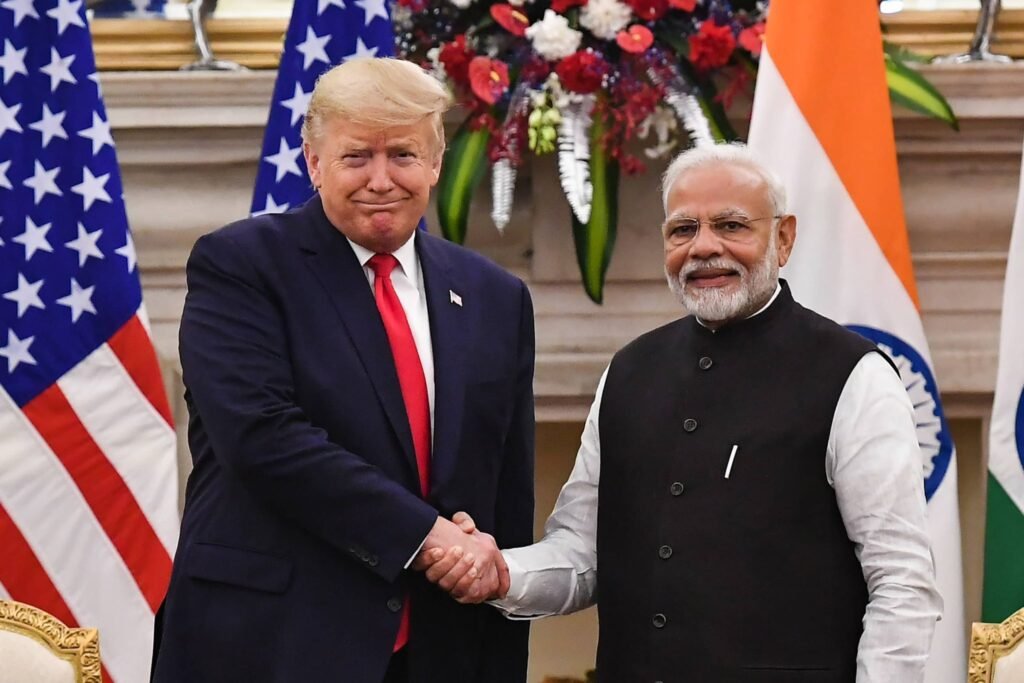
India is actively working to negotiate a new and balanced trade deal with the United States to mitigate the impact of President Donald Trump’s proposed tariffs. As of April 6, 2025, these tariffs, which include a baseline 10% levy on all imports and higher reciprocal rates—such as 26% on Indian goods—aim to address perceived trade imbalances and are set to take effect soon unless negotiations yield exemptions or adjustments. India’s strategy involves reducing tariffs on select U.S. imports while seeking reciprocal concessions to maintain fair trade relations, with the goal of protecting its $66 billion export market to the U.S., where it currently enjoys a $45 billion trade surplus.
The Indian government, under Prime Minister Narendra Modi, has signaled a willingness to compromise, such as lowering tariffs on over half of U.S. imports valued at $23 billion, including industrial goods like automobiles and chemicals, though it remains cautious about agricultural concessions due to domestic sensitivities. This approach builds on prior commitments, like the “Mission 500” initiative from earlier in 2025, which aims to boost bilateral trade to $500 billion by 2030. Unlike some nations opting for retaliation, India is prioritizing diplomacy, with bilateral talks already underway involving officials like Trade Minister Piyush Goyal and U.S. representatives. These negotiations, targeting a first-phase deal by fall 2025, reflect India’s effort to balance economic ties with the U.S. while navigating Trump’s protectionist policies.